I think I ran this right after we were told to put a framed copy of the “principles” on the wall. Or maybe I’m confused. Not that confusion is necessarily a bad thing…
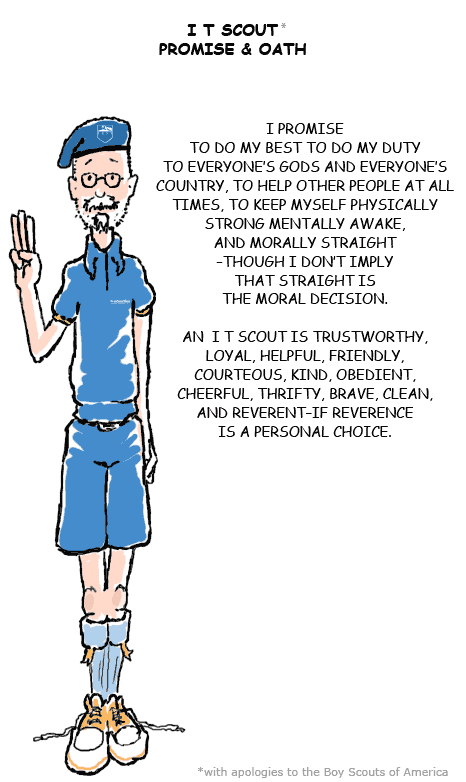
no screaming this time, just a big stick
I think I ran this right after we were told to put a framed copy of the “principles” on the wall. Or maybe I’m confused. Not that confusion is necessarily a bad thing…
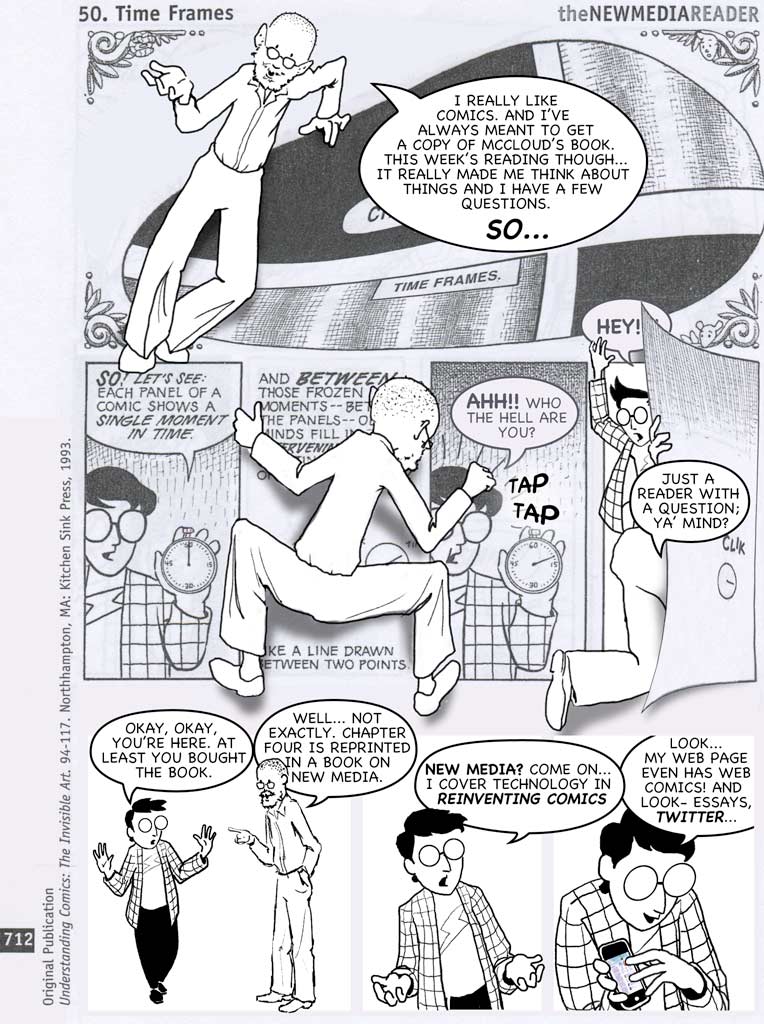
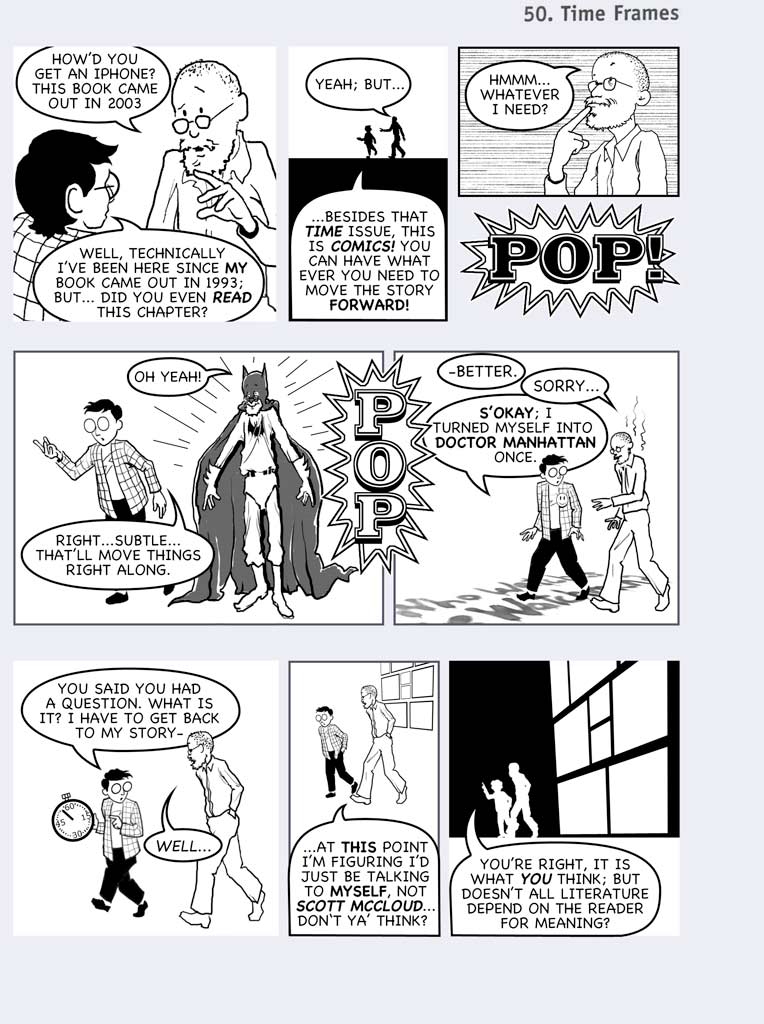
From November 2010 when our small reading group wrote reaction papers to readings in the New Media Reader. The last reading was a chapter from Scott McCloud’s classic, Understanding Comics and it was in comic format. My response, obviously, needed to be in the same comic format, so I stepped directly into Scott’s work to have a private word with him. I cracked me up, anyway…

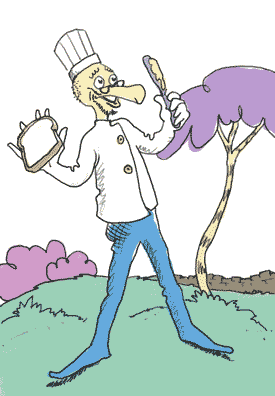
From June 2008 in direct response to activities in the office I posted this. There’s a popular power phrase that goes something like, “Do it and apologize later.” I take issue with it: it makes your apologies meaningless, and says you don’t stand up for what you believe. Do it. Explain why; and let others do the same. I thought a fun send up of a popular Dr. Seuss story would be a harmless, enjoyable way to discuss the idea. My poem revisits The Butter Battle Book in a parody of Seuss’s poetic verse and illustration style.
It was the first day of summer,
ten hours past spring…
and VanItch let me know a most wonderful thing.
There was going to be a wedding, a Zook cook’s dream.
and I was the cook, and I set the theme.
I’d pick the berries, I’d whip the cream.
The general’s daughter was wedding
a Zook Back Room Boy.
and the entire Zook nation
was filed-brimming with joy.
What would I cook for them I pondered all day
till very late I checked recipes, vexed with dismay.
All were good, but only one said, “Hooray!”
I’d serve the national dish;
Fruggle… simple… no clutter.
I’d serve homemade bread
all slathered with butter!
But what I knew best of the Boys from the Back Room
those who would stand, sit and eat right up next to the groom
is they took pride in each piece of their Zooky costume.
Each would eat his bread
with gloves on their hands;
then mingle with guests
filling social demands.
If the bread that they ate was served butter side down
as is the custom all over Zook farm, and Zook town,
each guest that night would leave with a frown.
The Boys in the Backroom
each eating a piece
wouldn’t notice their gloves
had been covered with grease.
Each hand that they shook, each dance partner’s dress
would pick up the grease and carry the mess.
The guests would leave, that night, in distress.
I knew what I’d do
for each boy and man.
It may cost my job, but
I’d come up with a plan.
I’d take each bread slice and put butter on top.
The Boys in the Backroom would see every drop
They’d shake and they’d dance with no need to stop!
But here is the question,
here is the test.
What would you do,
what do you think would be best?
Make it butter side up, apologizing later for the “gaffe”?
Or serve it up, and explain how it’s in their behalf?
Or do nothing at all, like the rest of the staff?
I know what I’d do,
what I think is right-
but what would you do
on this wedding night?
(This is currently running as a comment on my regular blog)
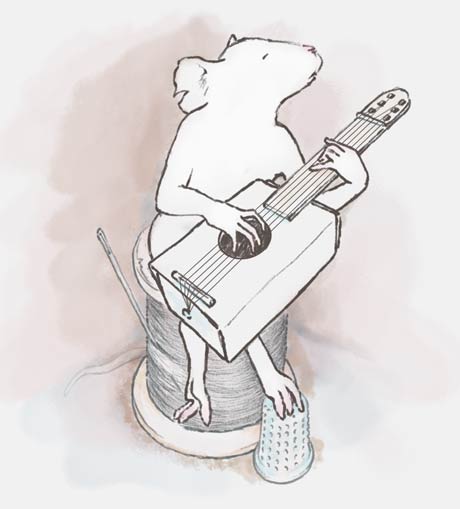
Sadly, my old blog will be going away. As the university transitions from MovableType to WordPress, everything gets dismantled. The files won’t even function as web pages. What to do? Let go, I guess. There are a few posts there that I enjoyed, though. So over the next few weeks, I’ll try to move some of my favorites to a spot here. In May of 2009, at a time when I found Lessig’s remix message to be misguided, I did a very short children’s fable as an artistic statement. Each word is taken from Lessig’s book Remix, so it’s a remix of Remix with the original context and page number of each word appearing on mouseover. I tried to make Lessig’s original context add meaning to my use of the word. Satisfying for me, but sadly, the entire thing fell flat.

nce upon a time, in a place far, far away, dreams could come true. If you lived your life—not just as if what you’d dreamed could be believed—but as though there had never been a doubt about the new reality, that reality was yours.
And so Mouse got out of bed. In his sleep, he had become a musician. Mouse found a match box. He took a string and he took a stick, and he began to play.
In each of the notes he played, mouse heard a perfectly performed statement full of extraordinary emotion. Mouse’s life changed. Moments took on new meaning as each was felt deeply and experienced fully. Mouse was a creator.
Mouse took his new instrument and went out for a walk. In the gardens he found other mice playing guitar. They let Mouse join their group.
“Studiedlong?” they asked.
“It’s my life,” said Mouse, and he began to play.
An artist may struggle to be understood. Understanding itself can be an art; not everyone will succeed or even try. Mouse stopped playing and opened his eyes. Everyone was gone.
“There is no joy in that bunch,” thought Mouse. He closed his eyes and played.
He played, and eventually someone else was drawn to his music.
“Yo, I have a match box just like yours!” she said.
“Enjoy'” whispered Mouse.
This fable is remixed from the text of Lawrence Lessig’s CC licensed Remix:Making art and commerce thrive in the hybrid economy. My thanks to Larry for sharing his creative, expressive vocabulary. To find the words in their original, and often dually appropriate, prose arrangement please refer to the title attribute pop-up for each.

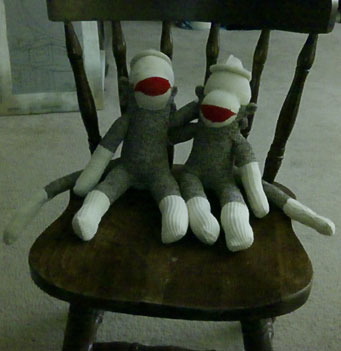 Nuts. Yesterday I did errands and completely forgot to stop for black embroidery thread. These things are pretty creepy the way they are.
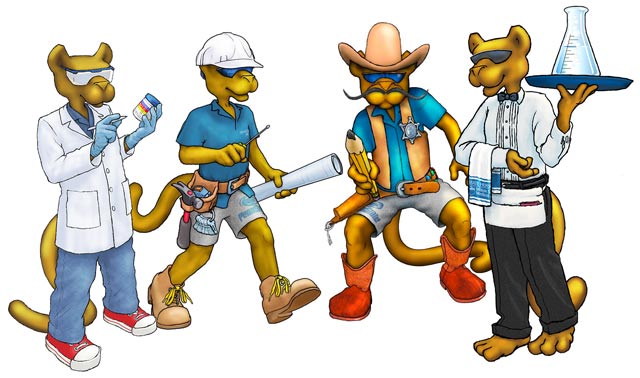
Just for giggles, I combined the shots of the last four lions that I drew: The lion for the Millennium Science Building, the one for the the Office of the Physical Plant, “Shut Up and Draw” for my own failed Web Conference presentation, and as a waitron for the Hershey Research Concierge. This lion obviously was a talented lion in its day. Will this be the end? I thought so after each one of these.

I haven’t needed one of these guys in a long time. I’ll have the layered version as a download on the old lion page within the next few days.
 One of the work related newsletters that I still subscribe to pointed me to a new web page for a group that I’m familiar with. We are completely unaffiliated, but their mission is still a part of me. I checked out the site and it’s very professional. It’s an attractive WordPress layout incorporating web fonts and the best of responsive design. I’m sure that if I ran it through a validator it would do as well as wordpress allows. It would do equally well on WebAIM’s WAVE.
It’s exciting seeing new work like this, since it wasn’t always this way. Refreshing, actually. Now the site looks as professional, and professionally done, as some of the top web sites I visit. In fact, it’s so well done, it could stand in for many of them. It has the same DNA as most, with only a few hints at sterility.
I no longer am involved with their people or their business, and I have no particular right to an opinion. I do feel strongly, though, about Penn State. I still feel connected to the community. I think that comes from the fact that it has a small town college feel about it regardless of its enormous budget and international reach. It has alway maintained a strong local character. It’s the future in your own back yard. Everything about it is recognizable as family. It makes me sad to see traditional family bonds break with new generations. Maybe that’s something I need to get used to. 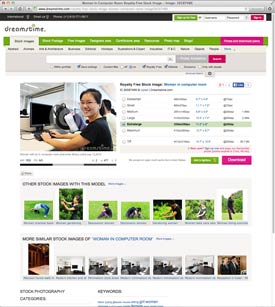 When I was employed, or at least for the first 10 years of my employment, I advocated strongly for the use of local images, local illustrations, and local talent. All of these local things help to establish those traditional family bonds: the things that identify us and speak to the richness and quality of a personal experience. And that personal experience is a lot of why someone might want to engage with Penn State. Along with advocating for that local feel, I tried to dissuade colleagues from clip-art and stock photography. The image on this groups page is gorgeous …and it’s stock photography- shot in the Shenzhen Library in China. Is it obvious? Likely not to the regular viewer, but to me? Clearly; nothing about it says Penn State. If the designer had found the picture and used it as a way of giving art direction to a student photographer, it would have served a wonderful purpose: A photo of a happy Penn State student using digital resources at the Pattee Paterno Library. Or the Blissell Library at New Ken. Or the Lartz Library at Shenango. Or the Montague Law Library. Mont Alto’s Library. The Alumni Library. The Engineering Library. Special Collections.
Perhaps several of the universities in the Big Ten will use this same image? That way it might take on a family feel. Unless the PacTen uses it, too. And Albright. And Bloomsburg. And La Salle. And Kutztown.
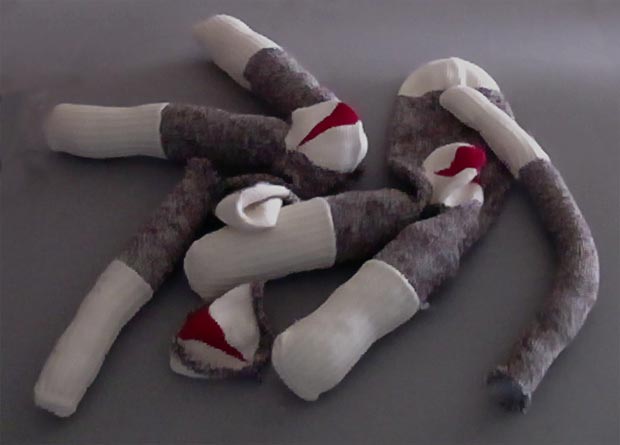
Currently skinned out and laying on my work table.
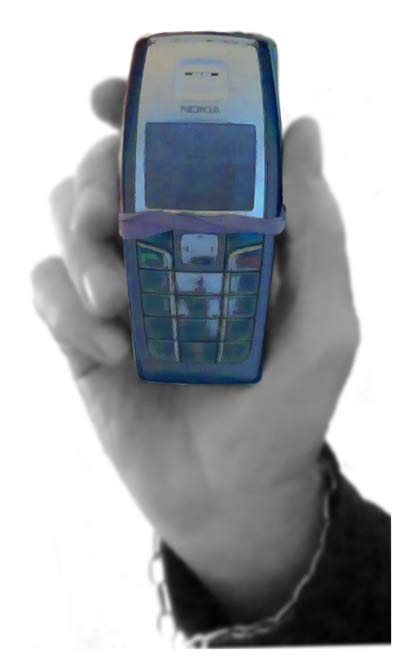 This is my cell phone: a Nokia 6015i. It was the first cell phone I ever had. Actually the only cell phone I’ve ever had. I got it so I could have a phone with me in case my daughter, who was in boot camp at the time, would have an unscheduled moment to call her dad. Otherwise, I’d be phone-less.
It gives me no joy. Using it is torture. The buttons, which if I used it regularly would be findable with muscle memory, are almost bare, and I struggle to figure out what each is. Most transactions that I’ve tried to use my phone for start by having me enter my ten digit phone number. I’ve never been able to make it. Let me add that sometimes the buttons take two or three presses to register a numeral. Other times they register twice in the blink of an eye.
So using it for my convenience just doesn’t happen. Everything else? I picture people with little electronic buttons and devious smiles. They know they can press the buttons and make obnoxious noises in the person of their choosing’s close proximity to the point that the individual absolutely must deal with the noise. I can’t do that to someone. I don’t like it when anyone does it to me. For that reason, my phone is usually out of the way somewhere. Lost in an odd coat pocket, a drawer, maybe bumping around on the floor of my car. At least, when I realize it’s been missing for a few days, those are the places I look first.
On rare occasions when I find it, and remember to press a button to light it up, I get a message that says I missed a message. Often times I miss that message for days, and only see the message that I’ve missed a message when the phone lights up to tell me it needs to be charged. Then I get to try to recover the message that I missed. Often that takes three or four tries, then I get to listen to many of my older messages before hearing the new one. Every now and then I’m able to delete a message. I’d really rather not have to.